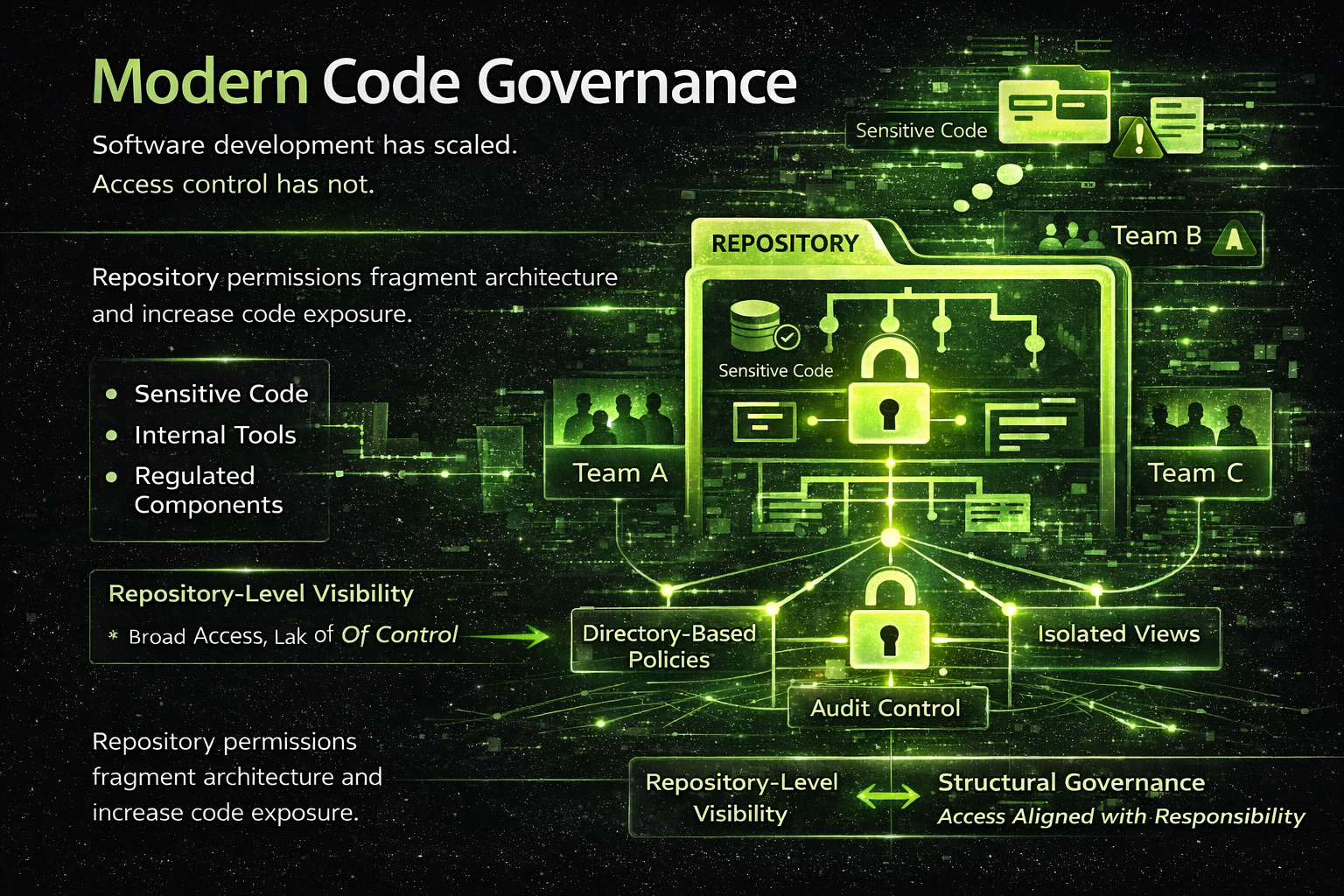
Modern Code Governance
Software development has scaled.
Access control has not.
Engineering teams today operate in monorepos, shared service architectures, and multi-team environments. Collaboration is faster than ever. Continuous integration is automated. Infrastructure is programmable.
But source code access is still mostly controlled at the repository level.
That model no longer fits modern engineering organizations.
The Structural Mismatch
Modern codebases are organized by directories.
Teams are organized by responsibility.
Security policies are organized by least privilege.
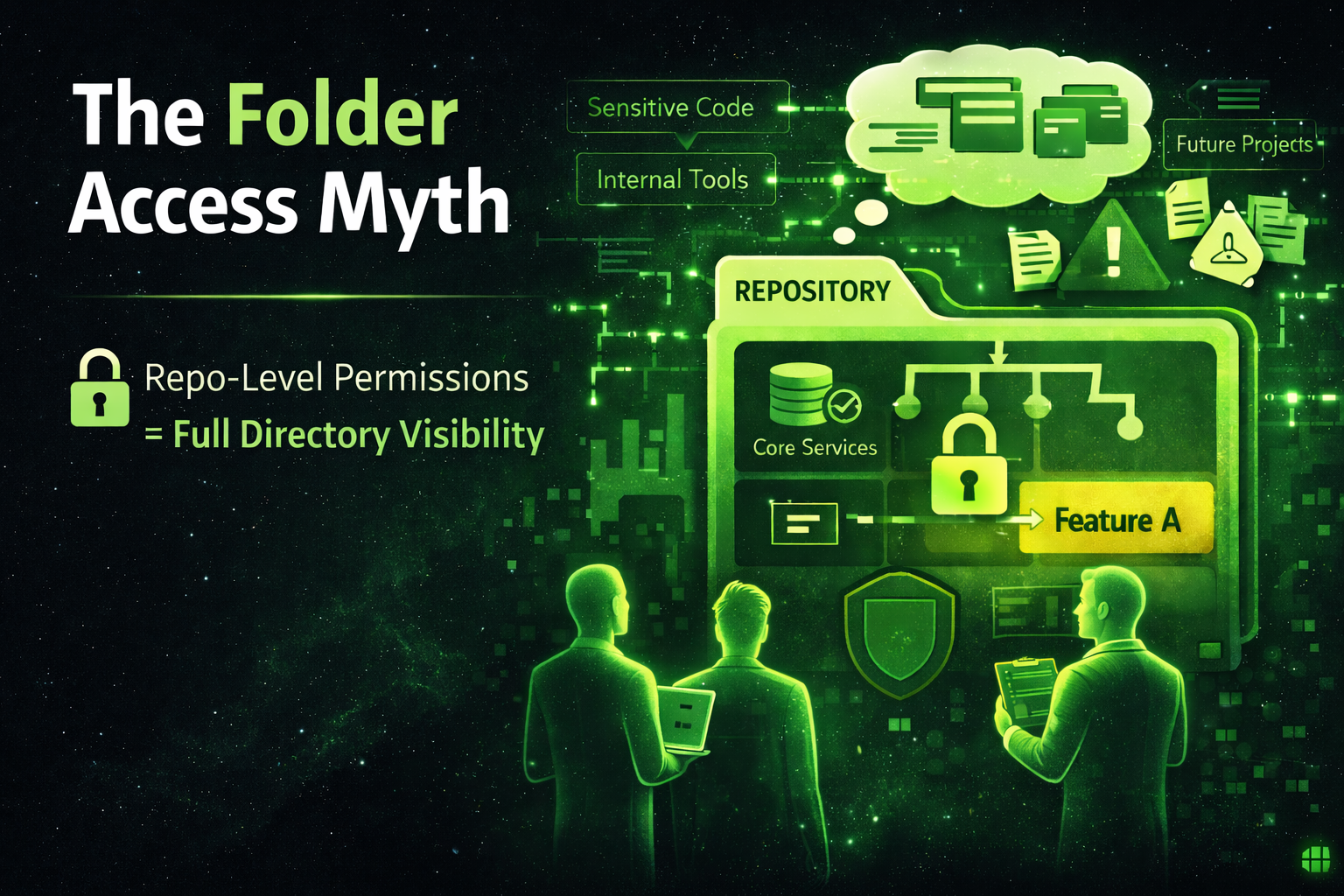
Yet permissions are organized by repository.
That mismatch creates a governance gap.
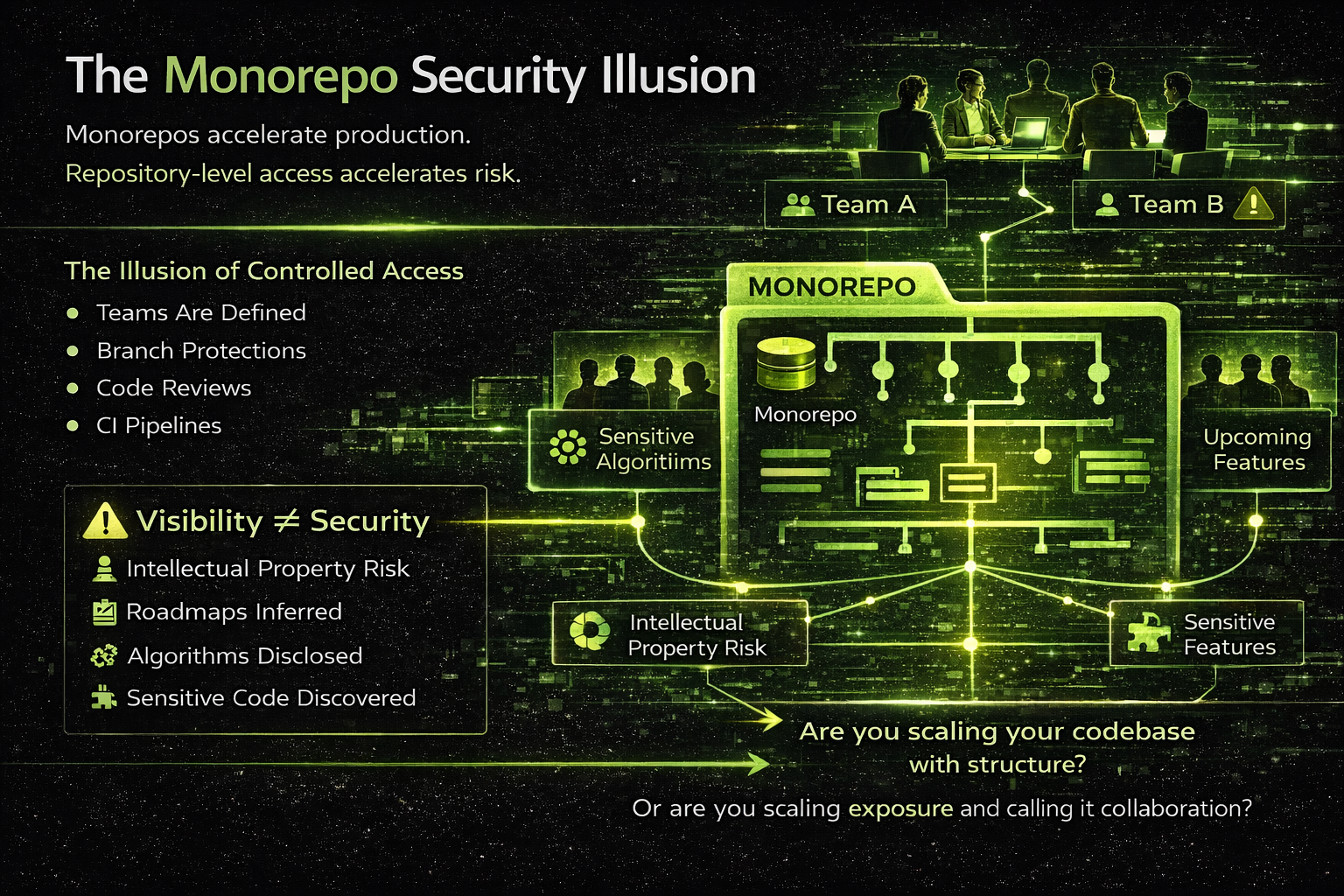
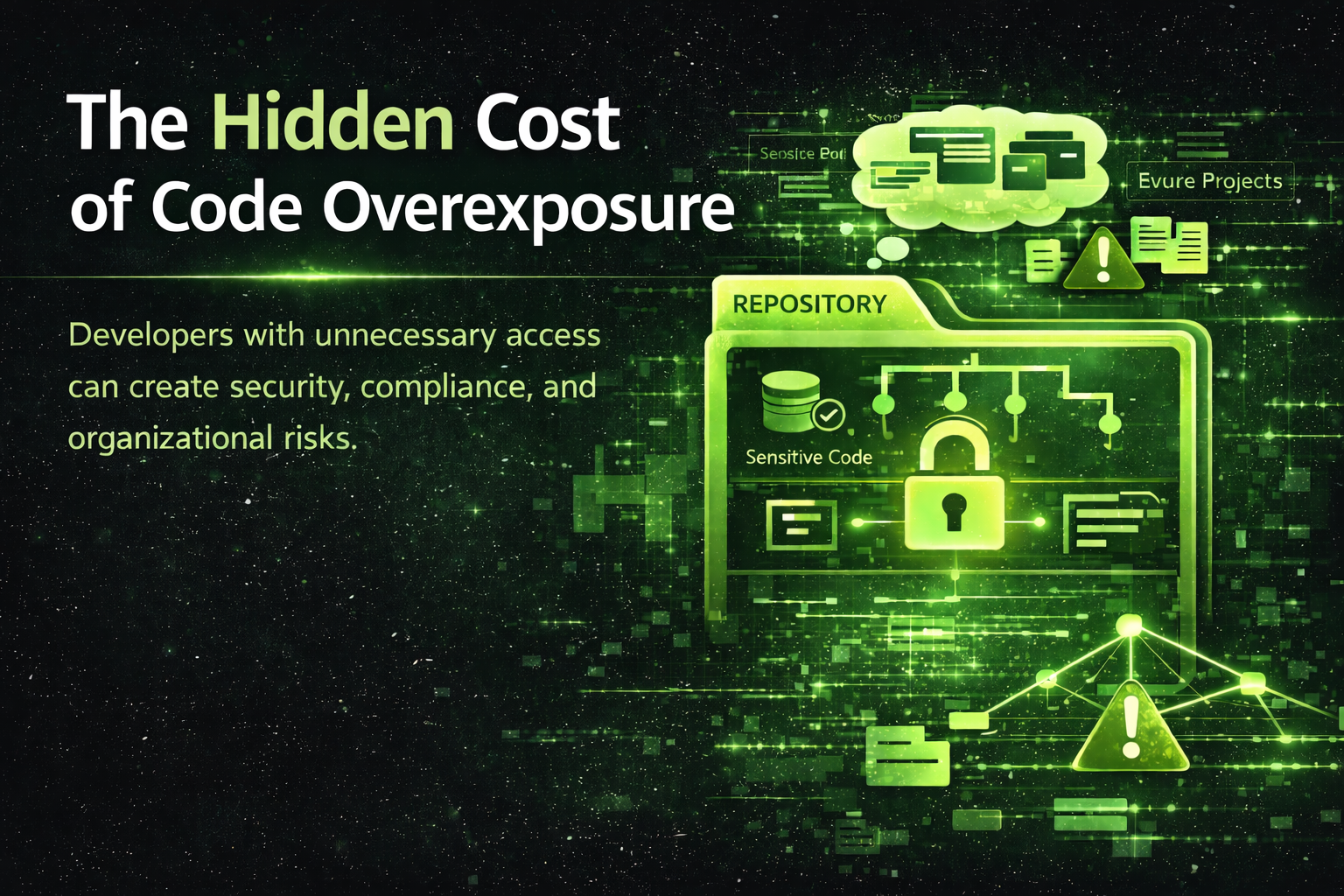
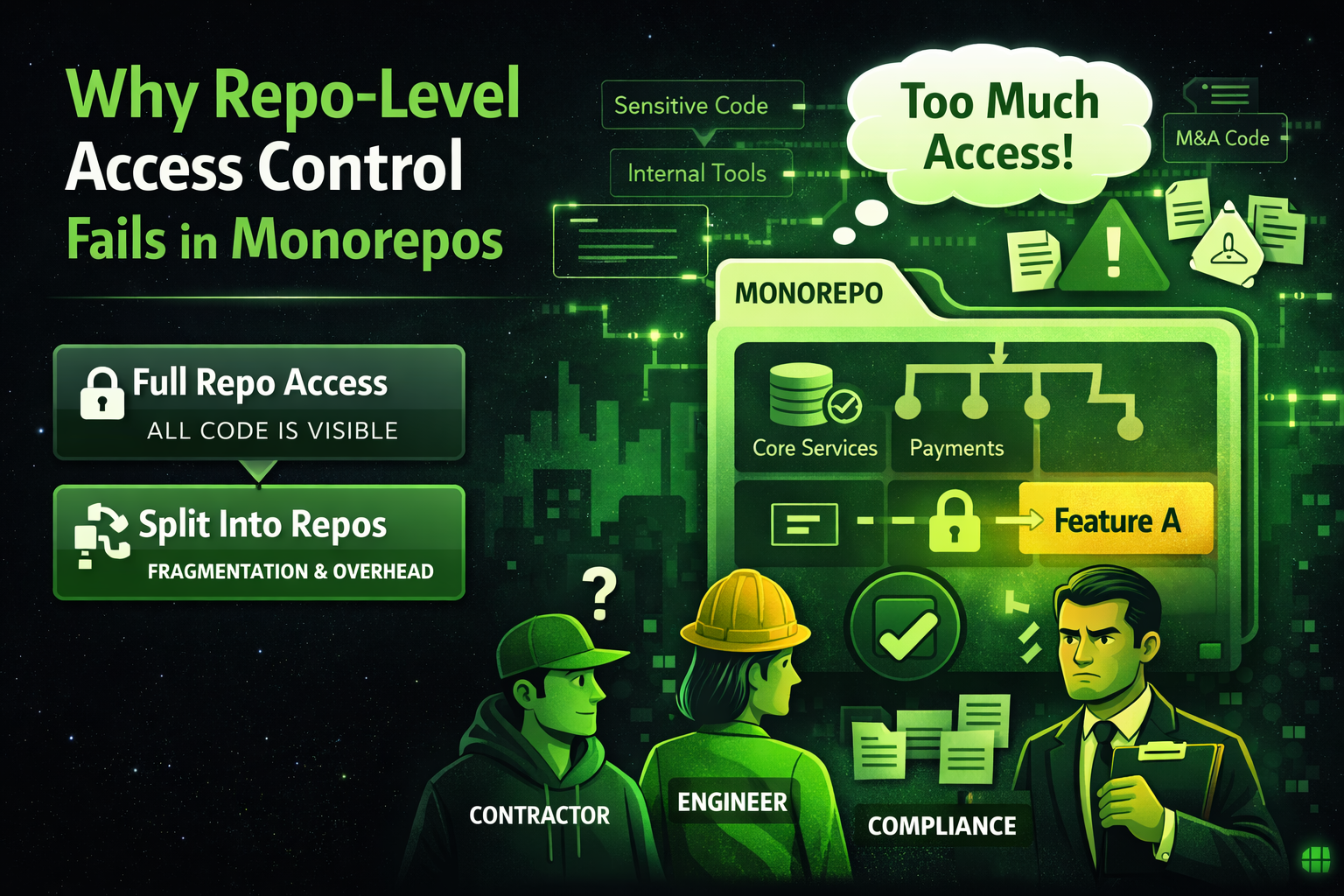
If someone has access to the repository, they can see the entire tree. Sensitive modules, internal tooling, experimental features, regulated components — everything becomes visible.
The system assumes trust at scale.
Modern organizations cannot afford that assumption.
Collaboration Without Boundaries
Collaboration platforms are powerful. They manage:
-
Pull requests
-
Reviews
-
Branch protections
-
CI pipelines
-
Team membership
But collaboration is not governance.
Governance requires:
-
Clear access boundaries
-
Policy enforcement
-
Controlled visibility
-
Auditability
When permissions stop at the repository level, organizations are forced to choose between architectural fragmentation and overexposure.
Neither is sustainable.
The Cost of Ignoring Governance
Without structural access control, companies begin compensating.
They split repositories unnecessarily.
They hide sensitive work in separate systems.
They build internal scripts to limit visibility.
They accept broad exposure as an unavoidable trade-off.
Over time, these workarounds create:
The architecture bends to the permission model instead of the permission model adapting to the architecture.
That is backwards.
Governance Must Be Structural
Modern code governance means aligning access with responsibility.
That requires moving beyond repository-level control.
A structurally governed system introduces:
-
Directory-aware access policies
-
Isolated views per team or role
-
Controlled synchronization into the main source
-
Full audit traceability
Developers continue using familiar workflows.
Organizations regain control over exposure.
Governance becomes embedded in the architecture, not layered on as an afterthought.
The Future of Code Access
Infrastructure adopted fine-grained IAM years ago.
Cloud systems enforce least privilege by default.
Source code governance is following the same trajectory.
As engineering organizations scale, the question is no longer whether collaboration tools are sufficient.
They are excellent at collaboration.
The question is whether collaboration alone can enforce accountability.
Modern code governance is not about restricting engineers.
It is about ensuring that access mirrors responsibility.
It is about scaling innovation without scaling risk.
And it begins at the root of the repository tree.