Most engineering leaders worry about external threats.
Very few worry about internal overexposure.
Yet in many growing organizations, dozens or hundreds of developers have visibility into parts of the codebase they do not need to see.
Not because of bad intent.
Not because of poor discipline.
But because of how repository permissions work.
And that creates a silent cost.
The Hidden Cost of Code Overexposure
Most engineering leaders worry about external threats.
Very few worry about internal overexposure.
Yet in many growing organizations, dozens or hundreds of developers have visibility into parts of the codebase they do not need to see.
Not because of bad intent.
Not because of poor discipline.
But because of how repository permissions work.
And that creates a silent cost.
Overexposure Is Not Just a Security Problem
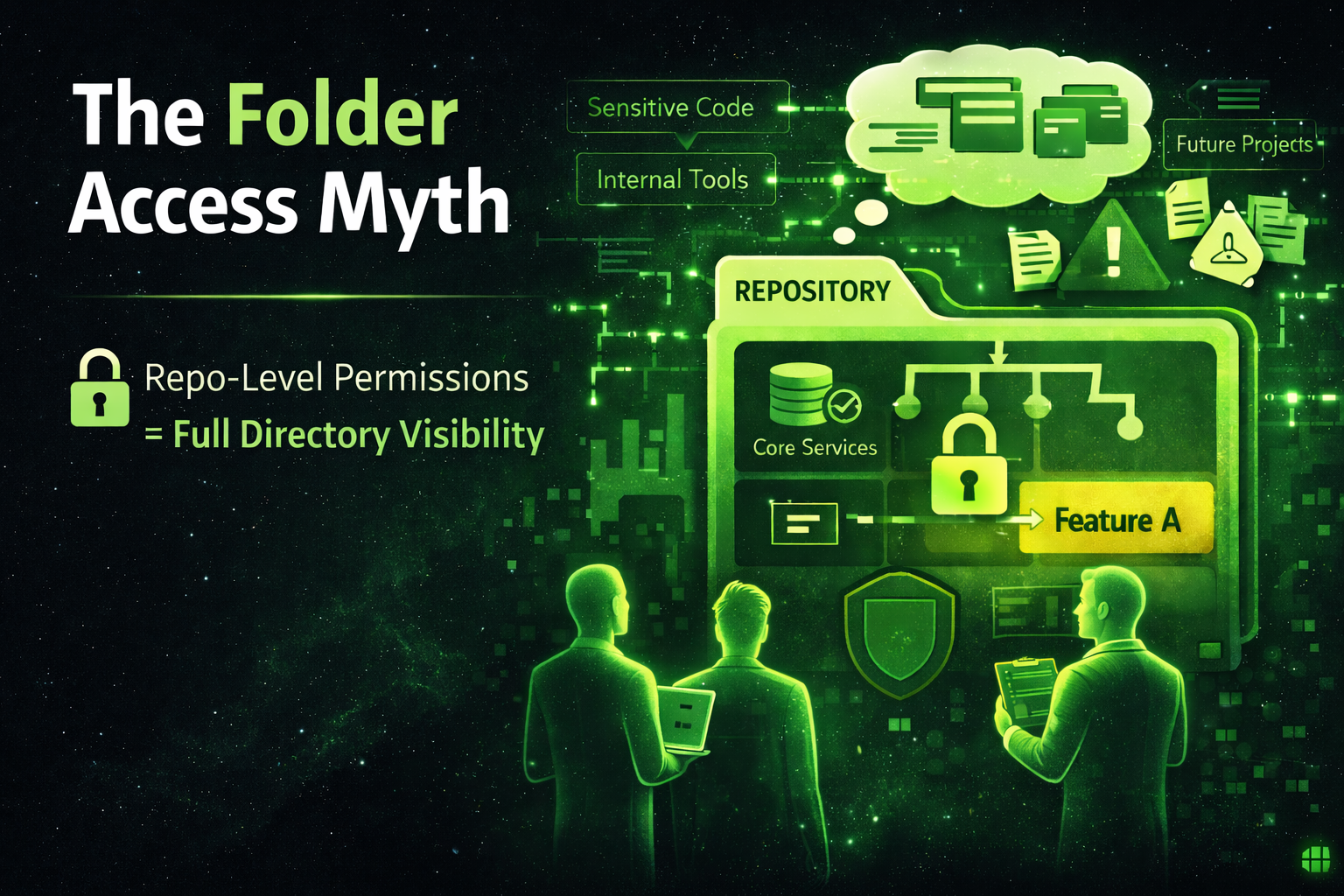
When someone has access to an entire repository, they can see:
Even if no data is stolen, overexposure creates:
The issue is structural, not behavioral.
The Compliance Blind Spot
Security frameworks emphasize least privilege.
In infrastructure, this is standard practice.
In source code management, it is often ignored.
When auditors ask:
“Who can access this sensitive component?”
The uncomfortable answer in many monorepos is:
“Anyone with repository access.”
That answer becomes more problematic as:
Exposure scales with headcount.
The Operational Cost Nobody Talks About
Overexposure also affects culture.
Engineers become hesitant to isolate projects.
Teams avoid placing experimental code in shared repositories.
Sensitive initiatives are hidden in side systems.
Instead of clean architecture, you get fragmentation driven by permission limitations.
That is not a technical constraint.
It is a governance failure.
Why Monorepos Amplify the Risk
Monorepos concentrate value.
They simplify dependencies.
They accelerate refactoring.
They centralize collaboration.
But they also centralize visibility.
When access is granted at the repository level, every new user increases the exposure surface of the entire tree.
The larger the organization, the larger the blast radius.
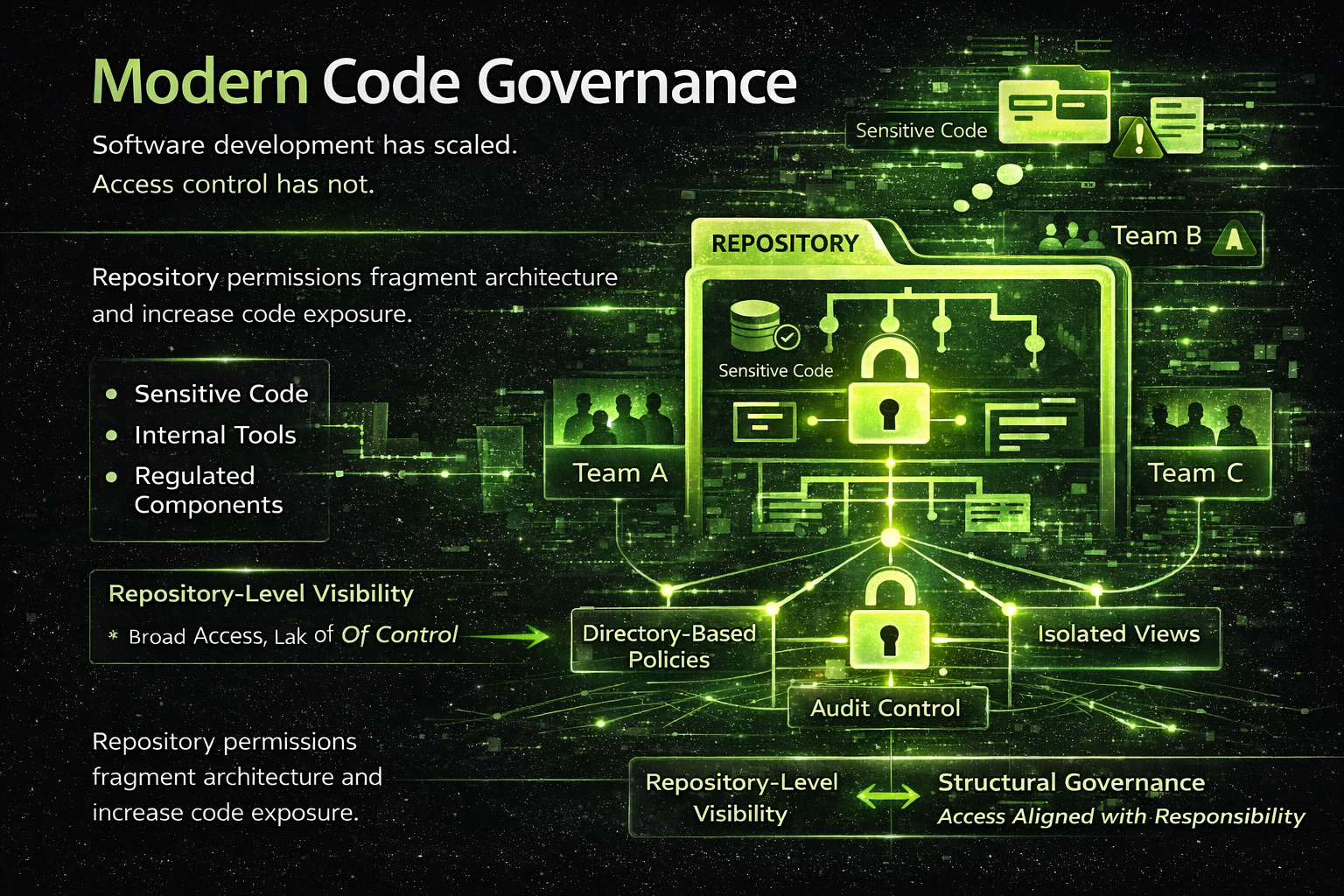
The Shift Toward Structural Control
The future of code governance is not about restricting collaboration.
It is about aligning access with responsibility.
That means:
-
Access defined by directory boundaries
-
Isolation without breaking developer workflow
-
Auditable policies
-
Minimal exposure by design
Collaboration platforms solved version control.
The next phase is governance control.
If your organization is scaling, the question is not whether overexposure exists.
The question is how long you can afford to ignore it.