Modern engineering teams love monorepos.
One repository. Multiple services. Shared libraries. Unified CI. Faster collaboration.
But there is a security problem hiding inside this convenience.
When your organization scales beyond a small team, repository-level permissions stop being enough.
And that is where most companies quietly lose control of their source code exposure.
Why Repository-Level Access Control Breaks in Monorepos
Modern engineering teams love monorepos.
One repository. Multiple services. Shared libraries. Unified CI. Faster collaboration.
But there is a security problem hiding inside this convenience.
When your organization scales beyond a small team, repository-level permissions stop being enough.
And that is where most companies quietly lose control of their source code exposure.
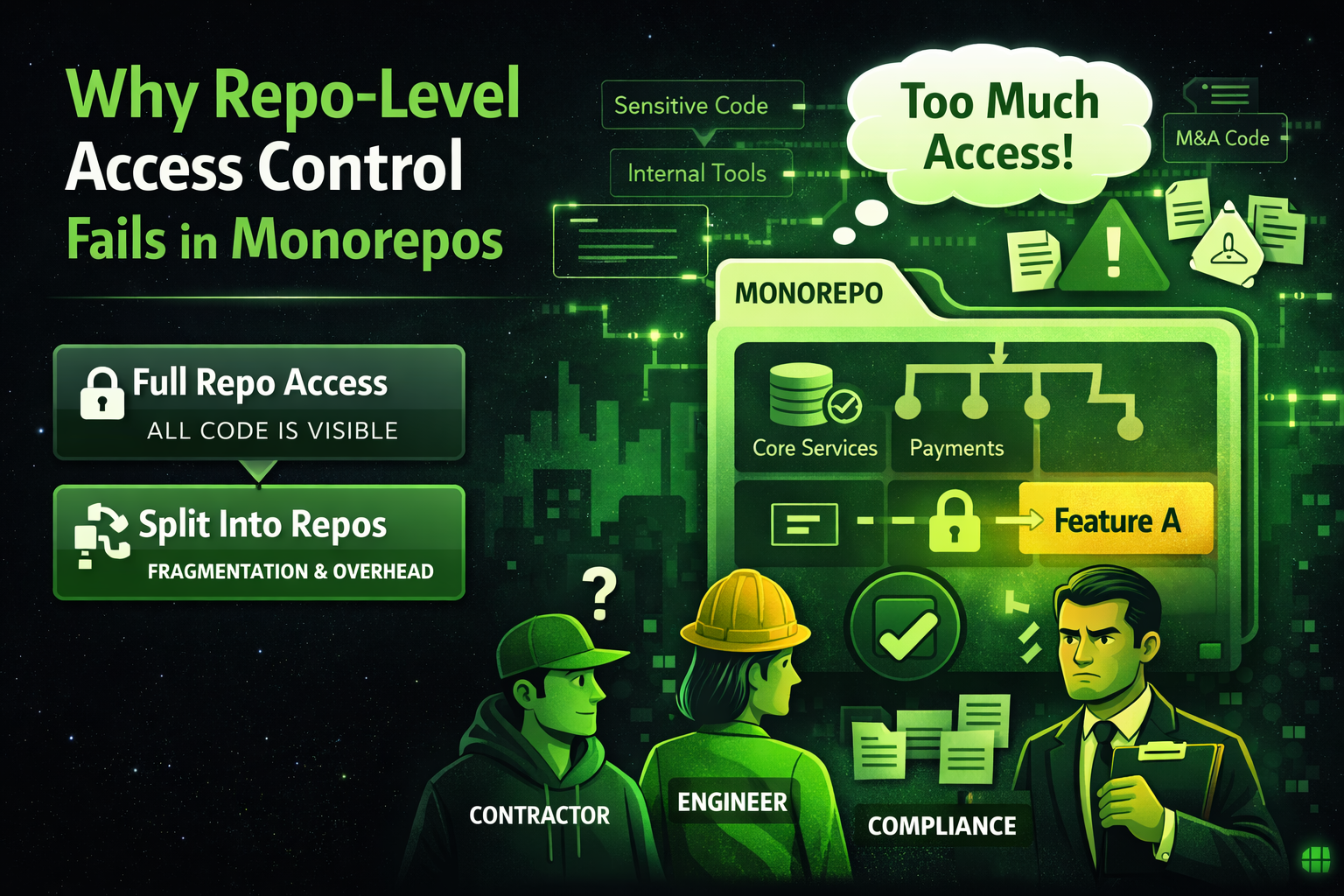
The Core Problem: All or Nothing Access
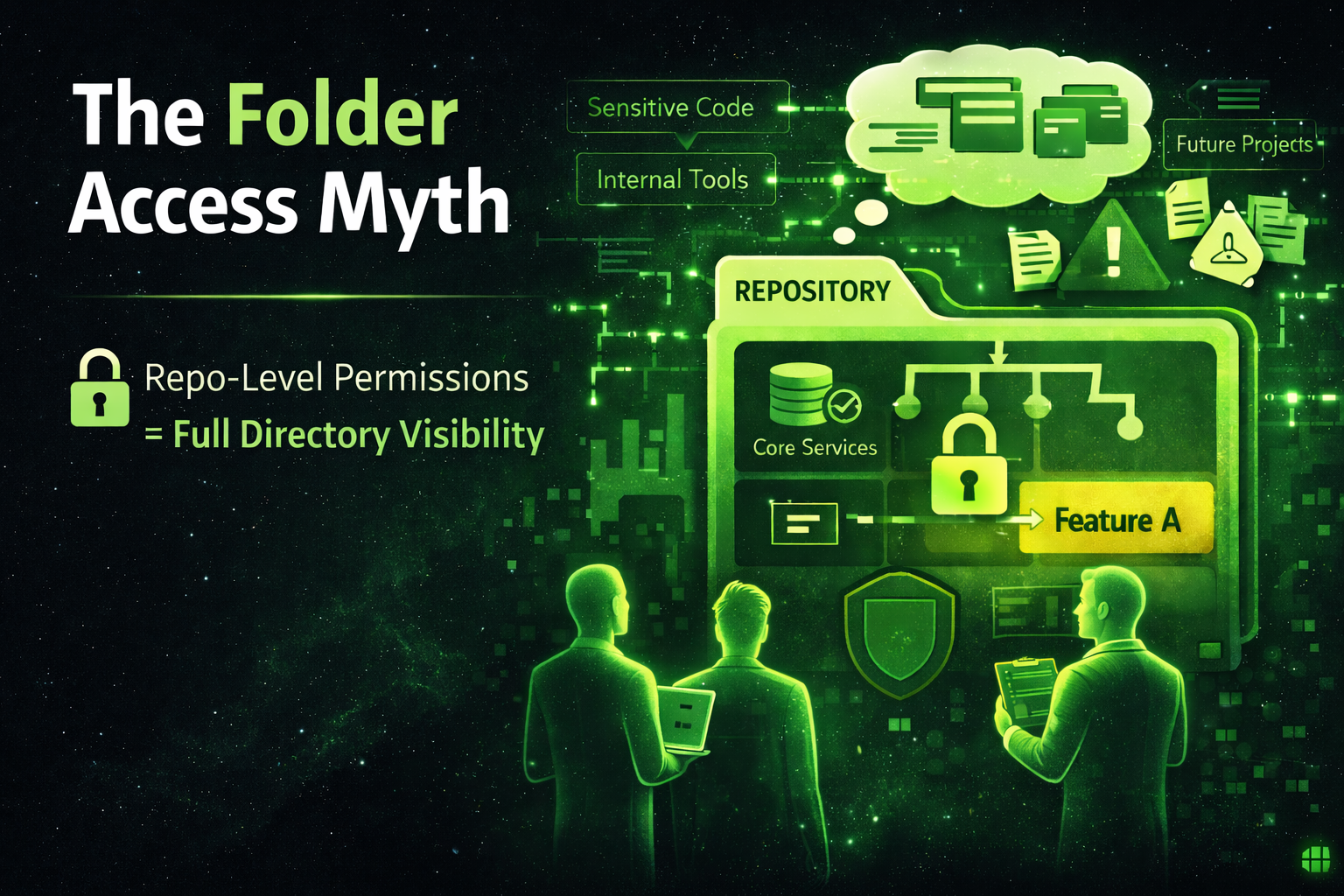
Platforms like GitHub and GitLab manage permissions at the repository level.
That means if someone has access to the repo, they can see everything inside it.
In a small project, that is fine.
In a monorepo with:
-
Multiple product teams
-
Internal tools
-
Sensitive services
-
Experimental features
-
External contractors
It becomes dangerous.
You either:
There is no clean middle ground.
What Actually Happens in Growing Organizations
Let us look at a realistic scenario.
A company has:
All working in one monorepo.
Now ask a simple question:
Should the contractor building Feature A see the entire payments service code?
Most security leaders would say no.
But technically, if they have repo access, they see everything.
That violates least privilege principles.
Why Repo Splitting Is Not a Real Solution
Many organizations try to solve this by splitting repositories.
But that introduces new problems:
You are not fixing access control.
You are restructuring architecture to compensate for permission limitations.
That is expensive.
The Principle Being Violated: Least Privilege
Least privilege means users only get access to what they absolutely need.
In cloud infrastructure, this is standard.
In source code governance, it is rarely implemented properly.
Monorepos amplify this weakness.
Because a monorepo is organized by directories, not by repositories.
And the permission model does not understand directory boundaries.
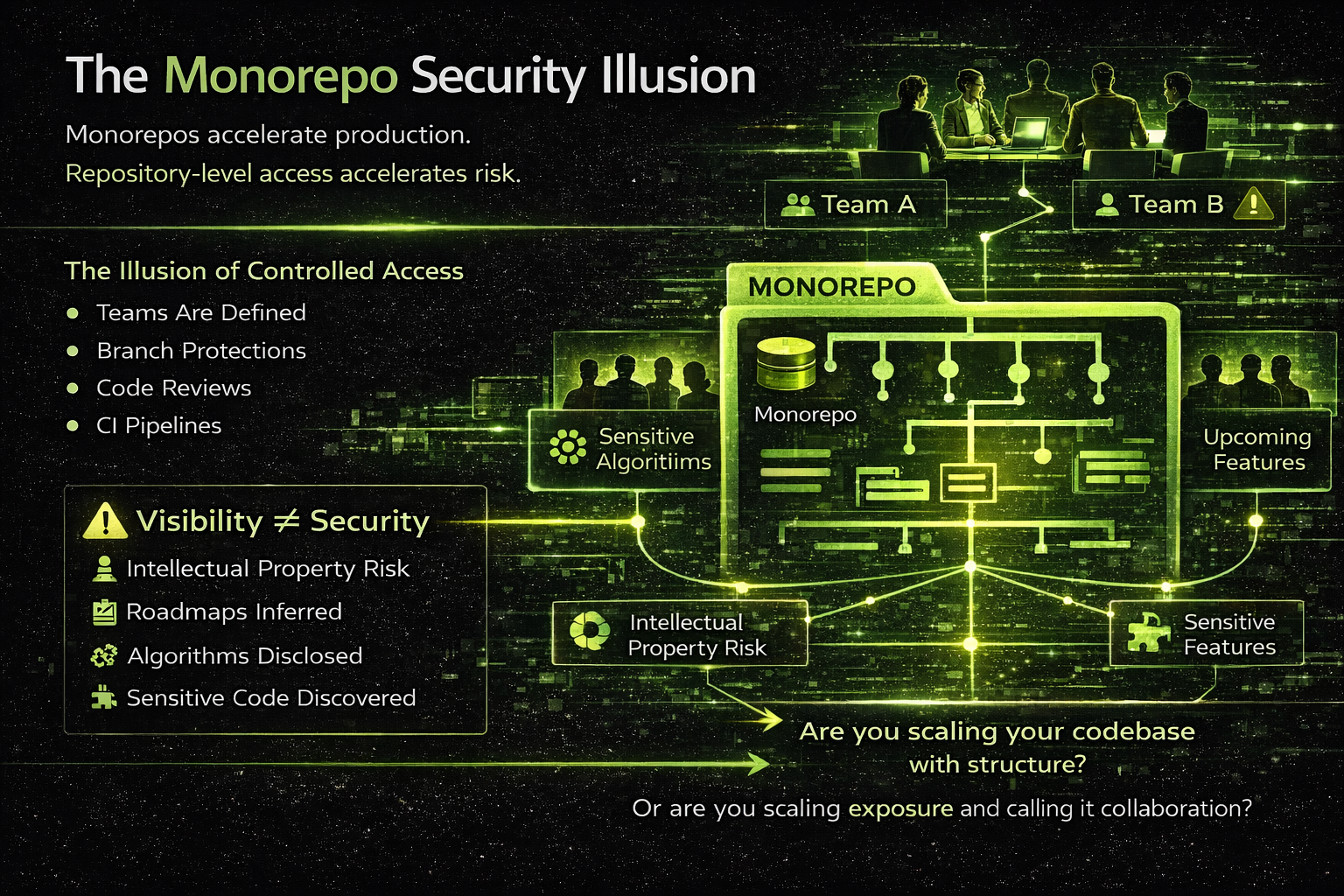
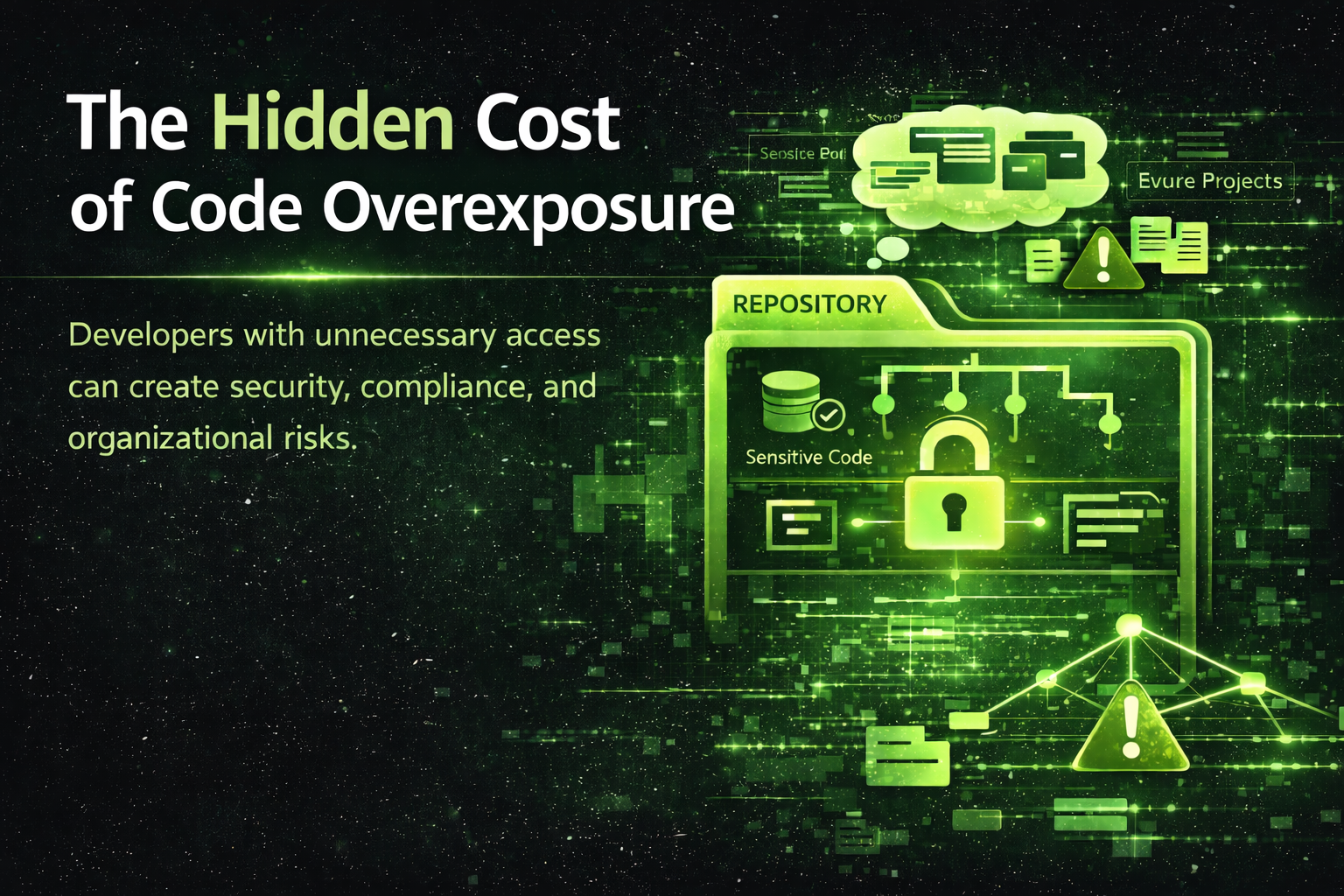
The Hidden Risk: Overexposure Is Invisible
The biggest issue is not that someone will intentionally steal code.
It is that:
-
Sensitive algorithms are visible to unnecessary users
-
M&A related code is exposed prematurely
-
Internal tooling becomes widely accessible
-
Regulated components are overexposed
All silently.
No alert.
No boundary.
No isolation.
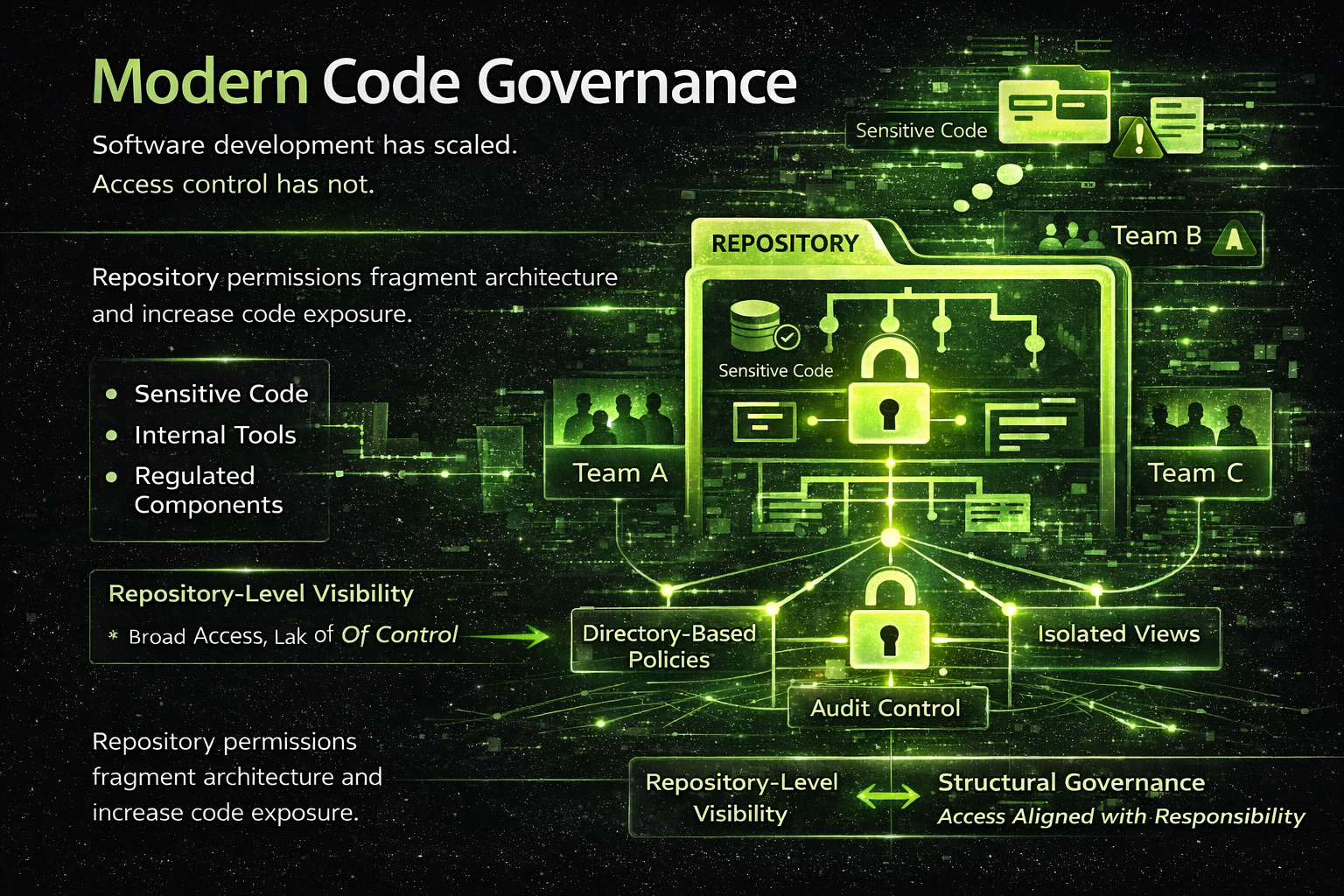
What a Proper Solution Requires
To secure monorepos properly, access control must:
-
Understand directory tree boundaries
-
Isolate views per team or user
-
Preserve developer workflow
-
Maintain pull request integrity
-
Keep the monorepo structure intact
Without forcing architectural fragmentation.
This means moving from repository-level control to directory-level enforcement.
The Strategic Shift
As engineering organizations mature, access governance must evolve.
Infrastructure already adopted fine-grained IAM.
Source code governance is next.
Monorepos are not the problem.
Coarse access control is.
The companies that fix this early will:
-
Reduce internal risk
-
Improve compliance readiness
-
Enable safer collaboration
-
Scale without security debt
In the next post, we will break down the exact limitations of GitHub and GitLab when it comes to path-level access control, and why most workarounds fail at scale.